Ascanio in Alba

Wolfgang Amadeus Mozart

Serenata teatrale in two acts
Libretto by Giuseppe Parini

From 13. March 2027 until 20. March 2027

  • Language:
    In Italian with German and English surtitles.
  • More information:
    Concert performance
    As part of Zurich Baroque
    © Poster image by Peter Paul Rubens

Musical Director:
Christophe Rousset

Christophe Rousset

Christophe Rousset, founder of the ensemble Les Talens Lyriques and internationally renowned harpsichordist, is one of the leading figures in historical performance practice. As a musician and conductor, he is particularly dedicated to the opera repertoire and the rediscovery of European musical heritage. He studied harpsichord at the Schola Cantorum in Paris with Huguette Dreyfus and continued his training at the Koninklijk Conservatorium in The Hague with Bob van Asperen. At the age of 22, he won First Prize at the International Harpsichord Competition in Bruges. In 1991, he founded Les Talens Lyriques. With his ensemble, he regularly appears at leading opera houses and concert halls in Europe, including the Opéra national de Paris, the Opéra-Comique, the Théâtre des Champs-Élysées, De Nationale Opera in Amsterdam, the Theater an der Wien, the Vienna State Opera, La Monnaie in Brussels, the Barbican Centre in London, and Teatro alla Scala in Milan. International tours have also taken him to Mexico, New Zealand, Canada, and the USA. In addition to his work as a conductor, he is active as a harpsichordist and chamber musician. His recordings of works by, among others, François Couperin, Rameau, Scarlatti, and Johann Sebastian Bach are considered reference recordings. He is also a sought-after educator and teaches at renowned institutions and academies. As a guest conductor, Christophe Rousset collaborates with major opera houses and orchestras. Furthermore, he is active as a musicologist and author, having published monographs on Rameau and François Couperin. Christophe Rousset is a Chevalier of the Legion of Honour, Commandeur of the Ordre des Arts et des Lettres, and Officier of the Ordre national du Mérite. In 2024, he was awarded the Handel Prize by the city of Halle.


Ascanio in Alba13 / 20 Mar 2027
Chorus Master:
Klaas-Jan de Groot

Klaas-Jan de Groot

Klaas-Jan de Groot is a Dutch conductor and choral director. Since the 2025/26 season, he has been Chorus Director of the Opernhaus Zürich. After studying in The Hague and Cardiff, he served from 2016 to 2022 as assistant to Chorus Director Ching-Lien Wu at the Dutch National Opera, where he prepared several productions and projects with the opera chorus. Since 2018, he has worked regularly with the Netherlands Radio Choir (Groot Omroepkoor). From 2018 to 2024, he served annually as assistant to Chorus Director Eberhard Friedrich at the Bayreuth Festival. He has conducted various concerts and performances with Opera Zuid as well as with the Orchestra of the Eighteenth Century and the Essener Philharmoniker. From 2022 to 2025, he was Chorus Director of the Aalto-Theater in Essen. Since 2023, he has worked regularly with the NDR Vokalensemble in Hamburg. In 2024, he made his debut with the MDR-Rundfunkchor as well as with the Rundfunkchor Berlin. In recognition of his support for emerging talent, Klaas-Jan de Groot was awarded the prestigious Dutch Conducting Prize of the Anton Kersjes Fonds in 2021.

Der Rosenkavalier21 / 26 Sept / 1 / 5 / 14 / 17 / 21 / 26 Oct 2025 Tannhäuser21 / 24 / 27 Jun / 2 / 5 / 8 / 11 Jul / 26 Sept / 4 / 9 / 13 Oct 2026 La Damnation de Faust10 / 14 / 17 May 2026 Hänsel und Gretel16 / 20 / 23 / 28 / 30 Nov / 2 / 4 / 11 / 16 / 18 / 21 Dec 2025 / 2 / 24 / 25 / 31 Jan 2026 Carmen18 / 21 / 23 / 27 / 31 Jan 2026 Un ballo in Maschera22 / 28 / 31 May / 7 / 13 Jun 2026 La forza del destino2 / 7 / 12 / 15 / 18 / 21 / 26 / 29 Nov / 17 / 21 Dec 2025 Rigoletto20 / 23 / 27 Dec 2025 / 1 / 4 Jan 2026 Fidelio3 / 6 / 10 / 14 / 16 May 2026 Macbeth8 / 11 / 14 / 19 / 22 / 30 Nov 2025 Cardillac18 / 21 / 25 Feb / 1 / 6 / 10 Mar 2026 Europa-Tournee 2026 «Messa da Requiem»22 / 23 / 25 / 26 / 29 / 31 Mar 2026 Die Zauberflöte20 / 25 Sept / 6 / 18 / 21 / 24 / 30 Oct 2026 / 2 / 8 / 18 / 20 / 23 Apr 2027 Die Fledermaus29 Sept / 8 / 17 / 23 / 25 Oct 2026 Rachmaninov – Die drei Opern1 / 4 / 8 / 15 / 18 / 21 / 28 Nov 2026 Manon Lescaut11 / 15 / 18 / 22 / 26 Dec 2026 Doctor Atomic7 / 11 / 14 / 20 / 24 / 28 Feb 2027 La fanciulla del west25 / 28 Feb / 3 / 7 Mar / 4 / 7 / 10 / 16 Apr 2027 Ascanio in Alba13 / 20 Mar 2027 L'elisir d'amore25 / 27 / 29 Apr / 2 / 6 / 9 / 12 / 14 / 17 / 21 May 2027 Requiem pour Ophélie4 / 7 / 9 May 2027 Samson et Dalila13 / 17 / 20 / 24 / 27 / 30 Jun / 2 / 9 Jul 2027 Don Carlo1 / 6 / 8 / 11 Jul 2027

Cast


Venere Mélissa Petit


Ascanio Alisa Kolosova


Silvia Anna El-Khashem

Aceste, Priester der Venus Anle Gou

Fauno Eleonora Bellocci

Mélissa Petit

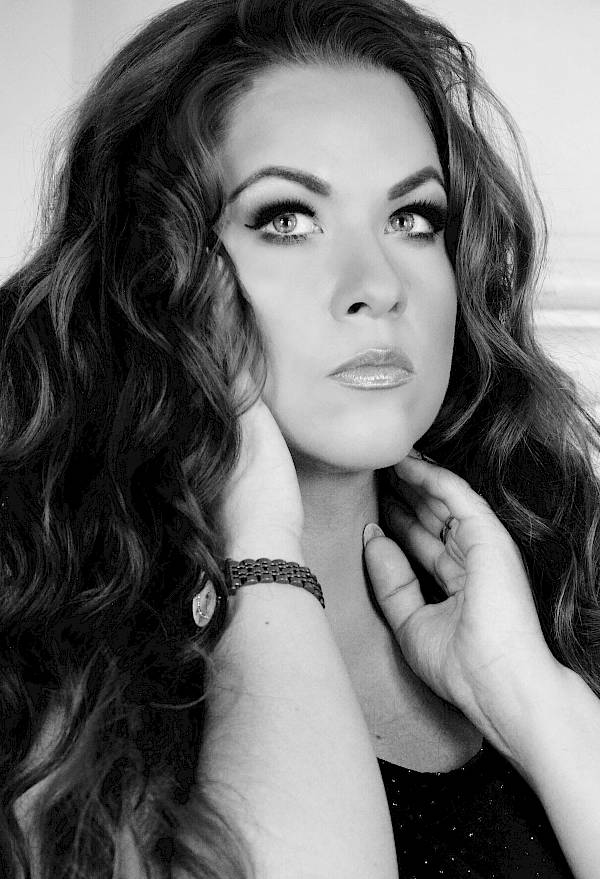
Mélissa Petit wurde in Saint-Raphaël (Südfrankreich) geboren und studierte am Konservatorium in Saint-Raphaël. 2009 gewann sie den 2. Preis des «Concorso Musica Sacra di Roma», später den 1. Preis beim Nationalen Wettbewerb in Béziers. 2013 gewann sie den 3. Preis der «Queen Sonja Competition» in Oslo. 2010-2013 war sie Mitglied des Internationalen Opernstudios in Hamburg. 2014 sang sie die Edilia in Händels Almira in einer Koproduktion der Hamburgischen Staatsoper mit dem Festival für Alte Musik in Innsbruck. Während der Spielzeit 2014/15 war sie u.a. an der Hamburgischen Staatsoper als Schwester Constance in Dialo­gues des Carmélites von Poulenc zu erleben. Ausserdem sang sie dort Barbarina in Le nozze di Figaro, Papagena in der Zauberflöte, Najade in Ariadne auf Naxos, Clorinda in La Cenerentola und die Titelrolle in Die unglückselige Cleopatra von Mattheson. Ab der Spielzeit 2015/16 gehörte Mélissa Petit zum Ensemble des Zürcher Opernhauses und war hier u.a. als Madame Silberklang (Der Schauspieldirektor), Philidel (King Arthur), Servilia (La clemenza di Tito), Ännchen (Der Freischütz), Sophie (Werther), Créuse (Médée), Eurilla (Haydns Orlando paladino), Marzelline (Fidelio), Johanna Barker (Sweeney Todd) und Aricie (Hippolyte et Aricie) zu erleben. In der Saison 2015/16 debütierte sie ausserdem an der Opéra Bastille in Paris als Giannetta (L’elisir d’amore), 2017 als Micaëla (Carmen) bei den Bregenzer Festspielen und 2018 als Juliette in Roméo et Juliette am National Center of Performing Arts in Peking. Im Sommer 2019 sang sie auf der Seebühne der Bregenzer Festspiele zudem Gilda in Rigoletto.

Ascanio in Alba13 / 20 Mar 2027

Alisa Kolosova

Alisa Kolosova, russische Mezzosopranistin, war Mitglied des Atelier Lyrique an der Opéra National de Paris und des Young Singers Program der Salzburger Festspiele. Von 2011 bis 2014 war sie Ensemblemitglied der Wiener Staatsoper, wo sie als Polina (Pique Dame), Olga (Eugen Onegin), Fenena (Nabucco), Annio (La clemenza di Tito) und Suzuki (Madama Butterfly) zu hören war. Ausserdem sang sie an weiteren renommierten Opern- und Konzerthäusern, wie der Opéra National de Paris, der Mailänder Scala, der Bayerischen Staatsoper, der Wiener Staatsoper, dem Concertgebouw Amsterdam, dem Kennedy Center Washington, der Carnegie Hall in New York sowie an den Salzburger Festspielen und dem Glyndebourne Festival. Sie arbeitete mit Dirigent:innen wie Riccardo Muti, Ivor Bolton, Vasily Petrenko, Andris Nelsons, Gianandrea Noseda, William Christie, Marin Alsop, Sir Andrew Davis und Sir John Eliot Gardiner. Zu ihrem Repertoire gehören u.a. Neris (Medea), Maddalena (Rigoletto), Samaritana (Zandonais Francesca da Rimini), Isoletta (La straniera), Federica (Luisa Miller), Dalila (Samson et Dalila) und die Titelrolle von Carmen. Zu ihren Höhepunkten im Konzertbereich gehören Schuberts Messe in Es-Dur unter Riccardo Muti bei den Salzburger Festspielen, Skrjabins 1. Sinfonie und Prokofiews Alexander Newski in der Carnegie Hall mit dem Chicago Symphony Orchestra unter Riccardo Muti sowie Beethovens 9. Sinfonie mit dem Orchestre Philharmonique de Radio France unter Mikko Franck. Jüngst gab sie u.a. ihr Rollendebüt als Ulrica (Un ballo in maschera) in Palma de Mallorca und sang Suzuki (Madama Butterfly) an der Bayerischen Staatsoper.

Ascanio in Alba13 / 20 Mar 2027

Anna El-Khashem

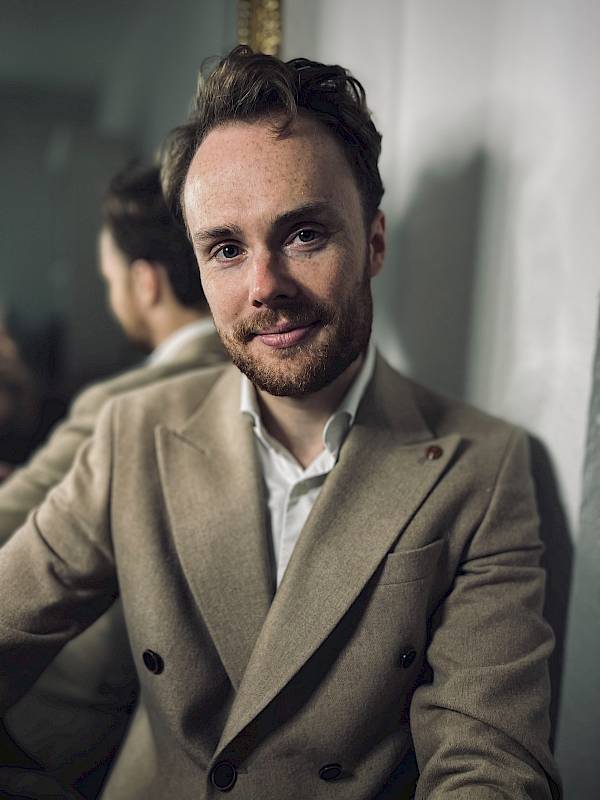
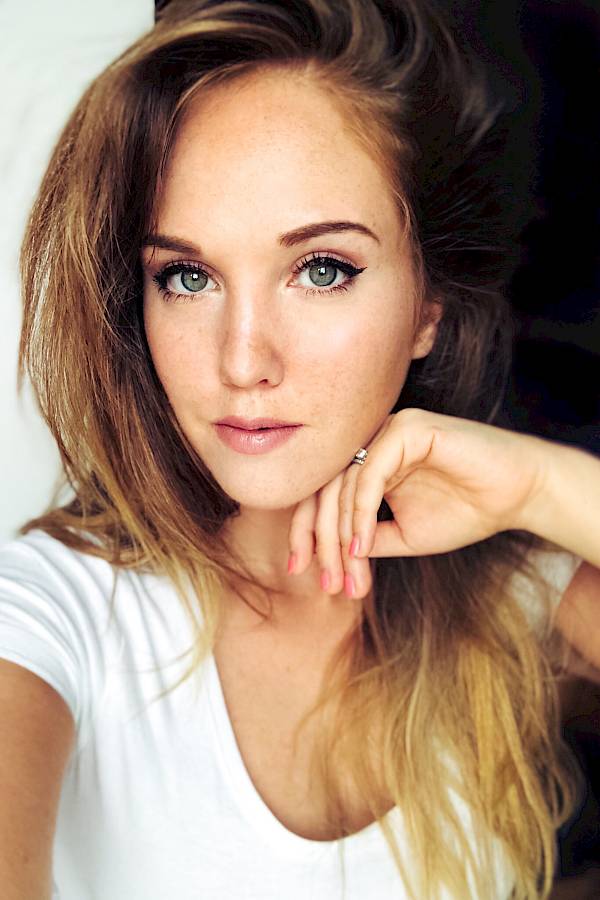
Anna El-Khashem, soprano, studied in St. Petersburg. She won, among others, the 1st prize at the Bertelsmann Foundation’s “Neue Stimmen 2019” singing competition, the Sergei Leiferkus Singing Competition, and in 2018, the 1st prize at the Mozart Competition at the Mozarteum Salzburg. She was also named Young Artist of the Year 2018 by the magazine Opernwelt. Performances have taken her to venues including the St. Petersburg Philharmonic and the Great Concert Hall of the State Conservatory in Moscow. Starting with the 2016/17 season, she was a member of the Opera Studio at the Bavarian State Opera, where she sang roles such as Barbarina (Le nozze di Figaro), the Sandman (Hänsel und Gretel), and Esmeralda (The Bartered Bride). With the 2019/20 season, she joined the ensemble in Wiesbaden, where she sang, among others, Pamina in Die Zauberflöte and Gretel in Hänsel und Gretel. Most recently, she also appeared there as Susanna in Le nozze di Figaro, as Woglinde in Das Rheingold and Götterdämmerung, as Sophie in the new production of Werther, and as Marzelline in Fidelio. She has worked with conductors such as Kirill Petrenko, Gustavo Dudamel, Ivor Bolton, Bertrand de Billy, and Simone Young. In the 2021/22 season, she made her house and role debut at the Paris Opera as Servilia in Mozart’s La clemenza di Tito, and also sang Susanna in the new production of Le nozze di Figaro and Zerlina in Don Giovanni, also in Paris. At Zurich Opera House, she has already appeared in a La Scintilla concert under Riccardo Minasi and performed the roles of Gemmira in Cavalli’s Eliogabalo and Clarine/Thalie in Rameau’s Platée.

Fidelio3 / 6 / 10 / 14 / 16 May 2026 Ascanio in Alba13 / 20 Mar 2027
Show full cast Show less
Extra Choristers
Les Talens Lyriques

Abstract

Wolfgang Amadeus Mozart was only fifteen years old when he composed «Ascanio in Alba». Celebrated throughout Europe as a child prodigy, he received the honorable commission from Empress Maria Theresa: the occasion was the wedding of her son, Archduke Ferdinand, in Milan. The work is an allegorical festive play: Venus brings her son Ascanio together with the nymph Silvia, who is of divine lineage. Magnificent choruses, a festive orchestra, and virtuosic arias in the style of opera seria made the serenata a great success already at its premiere. For the concert performance, Christophe Rousset and his ensemble Les Talens Lyriques will make their first appearance at the Zurich Opera House.

Read more Show less